Blog >> Rome Fiumicino Airport (FCO) Guide: Terminals, Lounges, Food, Transit, and Connections
By Kevin Zanes / March 23, 2026
Most people arriving at Rome Fiumicino Airport (FCO) spend their first few minutes looking for their terminal. That is the wrong thing to look for.
FCO has two operational terminals, but once you clear security you are not navigating terminals anymore. You are navigating boarding areas, and those determine your walking time, your lounge options, and whether you are about to discover that the satellite gates your flight leaves from have no lounges at all.
That last point catches more travelers off guard than almost anything else at this airport. Most flights to the United States depart from gates E31 to E44, a satellite section of Terminal 3 reached by an automated people mover called the SkyBridge. There is nothing in that satellite except gates. No lounges, no real dining, no way back without re-clearing security. Use the lounge before you board that train, not after.
FCO ranked 7th in the world at the 2026 Skytrax World Airport Awards, named Best Airport in Southern Europe for the second consecutive year, and handled over 51 million passengers in 2025. It is a genuinely impressive airport with one genuinely confusing structural trap.
This guide covers the five things that actually matter when you are flying through FCO: connections, terminals, lounges, food, and getting into the city. No filler, no fluff, just the stuff you will actually use before, during, and after your flight.
Rome Fiumicino Airport (FCO) At A Glance
![Aerial View Of Rome Fiumicino Airport [FCO]](https://www.thepointsanalyst.com/wp-content/uploads/2026/03/Image-1-3.jpeg "Rome Fiumicino Airport (FCO) Guide: Terminals, Lounges, Food, Transit, and Connections 1 - Rome Fiumicino Airport")
The terminal numbers at Rome Fiumicino Airport tell you where to check in. What governs your experience once you are through security is the boarding area. Terminal 1 has Boarding Area A. Terminal 3 has Boarding Area E, split between the main building (gates E1 to E30) and a satellite building (gates E31 to E44) reached only by an automated people mover. That satellite distinction matters more than anything else on this page.
- Airport Code: FCO
- Official Name: Leonardo da Vinci International Airport
- Location: Fiumicino, approximately 32 km (20 miles) southwest of Rome city center
- Address: Via dell’Aeroporto di Fiumicino 320, 00054 Fiumicino, Italy
- Terminals: Terminal 1 and Terminal 3
- Gates: 100+
- Daily Departures: 420+
- Destinations: 230+
- Primary Hub Airline: ITA Airways
- Annual Passengers: 51.0 million (2025)
- Official Website: adr.it
Terminal assignments, gate numbers, and operational details can change. Always confirm with your airline or at adr.it before travel.
Connecting At Rome Fiumicino Airport
If you remember one thing at FCO: the official minimum connection time is 40 minutes, and you should treat that number as a theoretical floor, not a travel plan. It assumes your inbound flight lands on time, passport control has no queue, and you are connecting within the same terminal on a Schengen route. For most international travelers, especially anyone crossing the Schengen boundary or connecting to the non-Schengen satellite, the realistic minimum is significantly higher.
![Rome Fiumicino Airport [FCO] Terminal Map](https://www.thepointsanalyst.com/wp-content/uploads/2026/03/Image-3-23-26-at-9.30-AM.png "Rome Fiumicino Airport (FCO) Guide: Terminals, Lounges, Food, Transit, and Connections 2 - Rome Fiumicino Airport")
Crossing The Schengen Boundary
Italy is part of the Schengen Area, so flights between Italy and other Schengen countries operate without passport checks. Flights to and from non-Schengen countries, including the United States, the United Kingdom, and most of Asia, require crossing a passport control boundary. Here is how the combinations play out:
- Schengen to Schengen: no passport control. Follow the connecting flights signs and walk to your gate.
- Schengen to Non-Schengen: passport control required before you can access Boarding Area E, where all non-Schengen departures originate.
- Non-Schengen to Schengen: passport control required. You are entering the Schengen Area, which means a full border check. This catches the most U.S. travelers off guard.
- Non-Schengen to Non-Schengen: you will pass through transfer security and may be subject to a border check depending on your routing and nationality. This is generally less involved than a full Schengen entry, but is not a simple airside walk. The official ADR transfer guidance notes that passengers arriving from non-Schengen countries must complete border checks regardless of their onward destination. Build in extra time.
Passport control queues at FCO are one of the most variable factors in the airport. During peak morning arrival windows, when multiple long-haul flights land within the same hour, queues can run 30 to 45 minutes or longer. If your connection involves any kind of boundary crossing, budget at least 90 minutes.
The E31 to E44 Satellite and The SkyBridge
This is the most important structural fact at Rome Fiumicino Airport for anyone flying to the United States or other long-haul non-Schengen destinations.
Boarding Area E splits into two sections. Gates E1 through E30 are in the main Terminal 3 building. Gates E31 through E44 are in a separate satellite building reached only by an automated people mover called the SkyBridge. The SkyBridge operates in one direction only: westbound for departing passengers heading to the satellite, eastbound for arriving passengers coming back to the main terminal. There is no lounge, no meaningful food, and no way back without re-clearing security once you have boarded the train toward the satellite gates.
If your departure gate is in the E31 to E44 range, use the lounge and eat before you board the SkyBridge. Once you are on the other side, your options are extremely limited.
Connecting Between Terminal 1 and Terminal 3
T1 and T3 are connected both landside and airside. On the airside, a covered walkway links the two terminals without requiring you to exit the secure area. The walk between the closest points takes roughly 8 to 10 minutes at a normal pace. Between the farthest points, including the walk from your arrival gate to the connector and then to your departure gate, budget 20 to 25 minutes of walking alone. Factor in any passport control requirement on top of that.
Separate Tickets
If both flights are on one booking, your bags transfer automatically and the airline is responsible for the connection. If you booked two separate tickets, you will almost certainly need to collect your bags, re-check them, exit the secure area, and clear security again from scratch. At FCO, that process realistically takes 90 minutes at minimum and often longer. Do not book a tight connection on separate tickets at this airport.
The EU Entry / Exit System
The EU Entry / Exit System launched at Rome Fiumicino Airport on October 12, 2025. It applies to non-EU nationals entering or leaving the Schengen Area on short stays and replaces the old passport stamp system with digital biometric registration. If you are arriving at FCO from outside Schengen, expect a biometric registration step at a self-service kiosk or staffed desk before or at passport control. Queues have been running longer than the pre-EES norm since the rollout. Build in an extra buffer if your connection is tight.
Connection Time Quick Reference
| Connection Type | Minimum Realistic Time | Key Note |
| Schengen to Schengen, same terminal | 45 to 60 minutes | No passport control, follow signs to gate |
| Schengen to Schengen, T1 to T3 or reverse | 60 to 75 minutes | Airside walk of 20 to 25 minutes between far gates |
| Non-Schengen to Schengen | 75 to 90 minutes | Passport control required |
| Non-Schengen to non-Schengen | 60 to 75 minutes | Transfer security and border check steps required |
| Any connection to gates E31 to E44 | Add 15 minutes | SkyBridge ride adds fixed time; no return without re-clearing security |
| Schengen to non-Schengen (Boarding Area E) | 75 to 90 minutes | Passport control required before Area E |
These are comfortable minimums, not guarantees. Longer connections are always safer. Confirm procedures with your airline before travel.
Rome Fiumicino Airport (FCO) Terminals
The terminal numbers at FCO tell you where to check in. What actually shapes your experience once you are airside is the boarding area. Terminal 1 has Boarding Area A. Terminal 3 has Boarding Area E. Everything flows from that.
Terminal 1: Boarding Area A
![Rome Fiumicino Airport [FCO] Terminal 1 Departures Map](https://www.thepointsanalyst.com/wp-content/uploads/2026/03/Image-3-23-26-at-9.33-AM.png "Rome Fiumicino Airport (FCO) Guide: Terminals, Lounges, Food, Transit, and Connections 3 - Rome Fiumicino Airport")
Terminal 1 is the smaller of the two terminals and the home base of ITA Airways. It handles domestic flights within Italy and Schengen flights to other European countries. All gates carry an A prefix, running from A1 to A83.
The terminal was significantly expanded when the old Terminal 2 was demolished in 2017, with a new three-storey boarding and waiting area added to the northwest. The result is a modern, well-laid-out space with good natural light, clear signage, and the best single food option at the entire airport: the Eataly food court on the mezzanine level of Boarding Area A.
If you are flying within Europe on ITA Airways or another Schengen carrier such as Air France, KLM, Ryanair, easyJet, or Vueling, you will almost certainly depart from Terminal 1. Security is generally faster here than at Terminal 3, and the terminal is less crowded.
Terminal 3: Boarding Area E
![Rome Fiumicino Airport [FCO] Terminal 3 Departures Map](https://www.thepointsanalyst.com/wp-content/uploads/2026/03/Image-3-23-26-at-9.35-AM.png "Rome Fiumicino Airport (FCO) Guide: Terminals, Lounges, Food, Transit, and Connections 4 - Rome Fiumicino Airport")
Terminal 3 is the larger terminal and handles the majority of FCO’s traffic, including most domestic flights operated by non-ITA carriers, Schengen flights for airlines not assigned to T1, and all non-Schengen international routes. If you are flying to the United States, the Middle East, Asia, or anywhere outside the Schengen Area, you will depart from Terminal 3.
All gates carry an E prefix, running from E1 to E61. The terminal splits into two physically separated sections connected only by the SkyBridge.
- Boarding Area E, Main Building (Gates E1 to E30): The main departures hall, with the bulk of the shopping, dining, and lounge options in Terminal 3. The Plaza Premium lounge, the British Airways lounge, the Emirates lounge, and the ITA Airways lounges are all here. If your gate is in this section, your airside experience is reasonably comfortable.
- Boarding Area E, Satellite Building (Gates E31 to E44): The section that catches the most travelers off guard. Most transatlantic flights to the United States depart from this satellite. It is reached only by the SkyBridge, which operates in one direction only. There are no lounges in the satellite and food options are very limited. Use the lounge and eat before you board the SkyBridge.
Airline terminal assignments can change. Always confirm your terminal with your airline or at adr.it before travel.
A Note On Terminal 5
Some older sources still reference Terminal 5 at Rome Fiumicino Airport. It was used for years as a dedicated departure point for flights to the United States and Israel, with passengers checking in at Terminal 3 and busing out to T5. It closed for renovations in January 2017 and has not operated as a regular passenger terminal since. Those routes moved to the E31 to E44 satellite in Terminal 3. If your boarding pass references Terminal 5, check with your airline directly.
The Best Airport Lounges At Rome Fiumicino Airport
The lounge situation at FCO is actively changing. ITA Airways left SkyTeam in April 2025 and is expected to join Star Alliance in the first half of 2026. The dedicated Star Alliance lounge that previously existed at FCO is closed. ITA’s own lounges are currently available only to passengers flying ITA Airways or a Lufthansa Group airline. Star Alliance Gold members are being directed to Plaza Premium and Prima Vista as contract alternatives, but access has been reported as inconsistently enforced depending on your carrier and the day. Confirm your specific entitlement with your carrier before you fly.
Two practical notes before the breakdown: there is no lounge at Rome Fiumicino Airport positioned before passport control and accessible to all departures. Each lounge sits on one side of the Schengen boundary or the other. Know which side your gate is on. And there are no lounges in the E31 to E44 satellite. If your gate is in that range, use the lounge in the main T3 building before you board the SkyBridge.
Lounge access rules, hours, and prices change frequently. Always confirm current details at adr.it or directly with each lounge before travel.
Best Overall For Priority Pass: Plaza Premium Lounge, Terminal 3
![Plaza Premium Lounge - Terminal 3 At Rome Fiumicino Airport [FCO]](https://www.thepointsanalyst.com/wp-content/uploads/2026/03/Image-2-4.jpeg "Rome Fiumicino Airport (FCO) Guide: Terminals, Lounges, Food, Transit, and Connections 5 - Rome Fiumicino Airport")
The strongest open-access lounge at Rome Fiumicino Airport for Priority Pass members on non-Schengen departures. 1,000 square meters, seating for up to 300 guests, upper level of Boarding Area E above gates E1 to E8. Full hot and cold buffet, self-serve bar, showers, and charging points. Gets busy during peak morning transatlantic departure windows. Arrive early.
Location: T3, upper level near E1 to E8. Airside, non-Schengen.
Hours: 05:00 to 21:00 daily.
Access: Priority Pass, DragonPass, LoungeKey, American Express Platinum Card®, eligible Air Canada, American Airlines, and Etihad business class passengers. Walk-up available. Not accessible from the E31 to E44 satellite.
Best For Schengen Departures: Plaza Premium Lounge, Terminal 1
Smaller and calmer than the T3 location. 400 square meters, 76 guests, mezzanine level of Boarding Area A. Freshly prepared meals, snacks, and beverages. Premium spirits carry an additional charge.
Location: T1, Boarding Area A, mezzanine level. Airside, Schengen.
Hours: 04:30 to 21:30 daily.
Access: Priority Pass, DragonPass, eligible business class passengers. Walk-up available.
Best Airline Lounge: British Airways Lounge, Terminal 3
The most polished airline lounge at FCO for those who qualify. 460 square meters, central bar, armchair and cafe-style seating, apron views, buffet with complimentary drinks. A clear step above the open-access options.
Location: T3, upper level near E1 to E8, adjacent to Plaza Premium. Airside, non-Schengen.
Hours: 05:15 to 20:30 daily.
Access: BA business class, BA Executive Club Gold and Silver, Oneworld Emerald and Sapphire on BA or another Oneworld carrier. Not Priority Pass.
Best For ITA Airways and Lufthansa Group Passengers: ITA Airways Lounges, Terminal 3
![ITA Airways Lounge - Terminal 3 At Rome Fiumicino Airport [FCO]](https://www.thepointsanalyst.com/wp-content/uploads/2026/03/Image-3-3-scaled.jpeg "Rome Fiumicino Airport (FCO) Guide: Terminals, Lounges, Food, Transit, and Connections 6 - Rome Fiumicino Airport")
Two lounges: the Hangar Lounge (Schengen) and the Piazza di Spagna (non-Schengen). Italian-themed design, Julius Meinl coffee, noticeably quieter than the open-access options. Star Alliance Gold access is being phased in as ITA’s integration progresses. Confirm current access rules before travel.
Hours: 05:30 to 23:00 daily.
Access: ITA Airways business class and elite members, Lufthansa Group business class passengers, Miles and More Senator and HON Circle members. Not Priority Pass.
Best Priority Pass Fallback for Non-Schengen Departures: Prima Vista Lounge, Terminal 3
The reliable backup when Plaza Premium T3 is at capacity. Around 550 square meters near gates E51 to E61. Basic buffet, drinks, showers, Wi-Fi. Not glamorous, but it consistently accepts Priority Pass.
Location: T3, near E51 to E61. Airside, non-Schengen.
Hours: approximately 06:10 to 23:30 daily.
Access: Priority Pass, LoungeKey, DragonPass, Qatar Airways and Etihad business class. Walk-up: EUR 40.
Full Lounge Reference
| Lounge | Terminal | Access | Priority Pass |
| Plaza Premium | T3, upper level near E1 to E8 | Priority Pass, airlines, walk-up | Yes |
| Plaza Premium | T1, mezzanine level Area A | Priority Pass, airlines, walk-up | Yes |
| British Airways | T3, upper level near E1 to E8 | BA and Oneworld only | No |
| Emirates | T3, above E22 to E23 | Emirates and Qantas only | No |
| ITA Hangar Lounge | T3, Schengen area | ITA Airways and Lufthansa Group | No |
| ITA Piazza di Spagna | T3, non-Schengen area | ITA Airways and Lufthansa Group | No |
| Prima Vista | T3, near E51 to E61 | Priority Pass, airlines, walk-up | Yes |
| Primeclass | T1, Area A near A61 to A83 | Priority Pass, walk-up | Yes |
Hours, access rules, and walk-up prices are subject to change. Confirm current details at adr.it or directly with each lounge before travel. No lounges are located in the E31 to E44 satellite.
Which Credit Cards Get You Into FCO Lounges? Priority Pass, included with a number of premium travel cards, covers the Plaza Premium in T1 and T3, the Prima Vista in T3, and the Primeclass in T1. American Express Platinum Card® (Global Lounge Collection) covers the Plaza Premium in both terminals. ITA Airways lounges, the British Airways lounge, and the Emirates lounge do not participate in Priority Pass. Confirm current card benefits with your issuer before travel.
Best Places To Eat At Rome Fiumicino Airport
The best eating at FCO is in Terminal 1, airside in Boarding Area A. If you are departing from Terminal 3’s non-Schengen gates, your options are decent but not remarkable. If your gate is in the E31 to E44 satellite, they are thin. Know which terminal you are in and eat before you go through to your gate area.
Terminal 1 – Boarding Area A: The Best Eating at FCO
![Eataly - Terminal 1 At Rome Fiumicino Airport [FCO]](https://www.thepointsanalyst.com/wp-content/uploads/2026/03/Image-4-2.jpeg "Rome Fiumicino Airport (FCO) Guide: Terminals, Lounges, Food, Transit, and Connections 7 - Rome Fiumicino Airport")
Eataly is the standout. It occupies 2,000 square meters on the mezzanine level of Boarding Area A, making it the largest airport Eataly in the world. Fresh pizza by the slice, pasta, salads, panini, gelato, and a wine bar. Prices are airport prices, but the quality is genuinely above the norm. The Terrazza Eataly, an outdoor extension opened in 2024, offers cocktails, charcuterie boards, and a full aperitivo menu.
One honest note: the main sit-down section draws inconsistent reviews for slow service. The Terrazza and the grab-and-go counters get better marks. If you are in a hurry, go straight to the counters.
Other T1 options worth knowing: Rossopomodoro for Neapolitan-style pizza, Cioccolati Italiani for chocolate and good coffee, and Sophia Loren Restaurant for a proper sit-down Italian meal. Venchi has multiple locations across both terminals and serves excellent Italian gelato and chocolate.
Terminal 3 – Boarding Area E: Decent, But Not Memorable
The second floor of Boarding Area E has the strongest concentration of options. Ajisen Ramen is a reasonable choice before a long flight. Beercode offers burgers and beer in the international departures area. Caffe Kimbo is the best coffee option if you want a proper Neapolitan espresso. Bottega Prosecco Bar is a decent stop for a glass of sparkling wine before departure.
The E31 to E44 Satellite: Plan Ahead
A Costa Coffee opened in April 2024 and there are basic snack outlets, but nothing worth planning around. Eat and drink in the main Terminal 3 building before you board the SkyBridge.
Travel Nerd Tip: Airport food at Rome Fiumicino Airport two to three times what you would pay at a bar or bakery in central Rome. If your schedule allows for a meal before you head to the airport, take it.
Restaurant availability and hours are subject to change. Confirm current options at adr.it before travel.
What To Do During A Layover At Rome Fiumicino Airport
![Visit Rome During A Long Layover At Rome Fiumicino Airport [FCO]](https://www.thepointsanalyst.com/wp-content/uploads/2026/03/Image-17.jpeg "Rome Fiumicino Airport (FCO) Guide: Terminals, Lounges, Food, Transit, and Connections 8 - Rome Fiumicino Airport")
Rome is 32 minutes away by train, and that changes the calculus of a layover at FCO. Most airports reward you for staying put. This one rewards you for leaving, as long as your layover is long enough.
Short Layover: Under 3 Hours
Stay in the airport. The math simply does not work for a city visit. Focus on your connection and eat at Eataly in T1 or the Boarding Area E options in T3. If your gate is in the E31 to E44 satellite and your layover is short, head to the lounge in the main T3 building first, then board the SkyBridge when you are ready for your gate.
Medium Layover: 3 to 6 Hours
The airport itself is worth exploring. Eataly in T1, the duty-free shopping in Boarding Area E, and the Plaza Premium or BA lounge if you have access are all good ways to spend a few hours. Rome is technically reachable from 5 hours onward but it is tight, and any delay on the return puts you in a bad spot. If you go, keep it simple and store bags at the T3 arrivals luggage facility before you leave.
Long Layover: 6 to 8 Hours
The sweet spot for a genuine Rome visit. Six to eight hours gives you roughly 3 to 4 hours in the city after accounting for travel time and a sensible return buffer. From Termini, the Pantheon is a 20-minute walk. The Trevi Fountain is another 10 minutes from there. Trastevere is a few stops on the FL1 regional train. Stick to the streets and the piazzas. Do not try to book timed entry to the Colosseum or Vatican without pre-booking well in advance.
Allow at least 2 hours to return from the city center, clear security, and reach your gate for a long-haul non-Schengen departure.
Very Long Layover: 8 or More Hours
With 8 or more hours, treat the day as a proper Rome visit. The Vatican Museums and Sistine Chapel, the Colosseum interior, or a long lunch in Trastevere are all realistic with pre-booked tickets and a sensible plan.
One honest caveat that applies at all layover lengths: Rome traffic is genuinely unpredictable, especially in the late afternoon and evening when the city slows down significantly. The Leonardo Express is not affected by traffic, but the walk from Termini to your destination and back adds real time. And the airport itself can be slow to navigate during peak departure windows. Always leave more buffer than you think you need when heading back.
Confirm your entry requirements for Italy before leaving the airport. Non-Schengen travelers need a valid visa or visa waiver for Italy to exit the secure area.
Security At Rome Fiumicino Airport
Security at FCO has a headline that most guides currently get wrong, so it is worth leading with an accurate picture.
The CT Scanner Rule and Its Big Exception
Rome Fiumicino completed the rollout of next-generation CT scanners across all passenger terminals by July 2025. Since July 26, 2025, the official rule at FCO is that liquids in containers up to 2 liters are permitted in hand luggage, and laptops and electronic devices do not need to be removed from your bag at the security checkpoint. This applies to both Terminal 1 and Terminal 3.
There is one significant exception that directly affects the majority of American travelers at this airport: flights bound for the United States and Israel are excluded from the new rules. If you are departing FCO on a transatlantic flight to the U.S., standard X-ray screening applies at your checkpoint. That means the 100ml liquid limit is still in force and laptops must come out of your bag. The official ADR security page states this clearly.
If you are transiting through another airport after FCO, check that airport’s own rules. The new FCO rules do not override restrictions at your connecting or final destination.
FastTrack
![FastTrack Security At Rome Fiumicino Airport [FCO]](https://www.thepointsanalyst.com/wp-content/uploads/2026/03/Image-7-3-scaled.jpeg "Rome Fiumicino Airport (FCO) Guide: Terminals, Lounges, Food, Transit, and Connections 9 - Rome Fiumicino Airport")
FastTrack priority security lanes are available at both Terminal 1 and Terminal 3. The cost is EUR 10 per passenger, with children aged 0 to 12 traveling free when accompanied by a paying adult. FastTrack can be purchased in advance through the ADR web shop at adr.it, or at information desks inside the airport on the day. Business class passengers and eligible frequent flyers on certain airlines may have FastTrack included with their ticket.
FCO security queues can be long during peak morning departure windows, particularly in Terminal 3 during summer. If you are departing during a busy window and your gate is in the non-Schengen area of Terminal 3, FastTrack at EUR 10 is a reasonable investment.
Passport Control: EES and E-Gates
The EU Entry / Exit System launched at FCO on October 12, 2025. It applies to non-EU nationals entering or leaving the Schengen Area on short stays and replaces the old passport stamp system with digital biometric registration. For arriving non-EU passengers entering the Schengen Area at FCO, expect a biometric registration step at a self-service kiosk or staffed passport control desk. Queues during peak arrival periods have been running longer than pre-EES norms since the rollout. Build this into your connection time if a Schengen boundary crossing is involved.
FCO was the first airport in Italy to install biometric e-gates for passport control. EU, EEA, and Swiss citizens with biometric passports can use these automated e-gates for faster processing without queuing for a staffed desk.
ETIAS, the EU’s new electronic travel authorization for visa-exempt non-EU travelers including those from the United States, Australia, Canada, and the United Kingdom, is expected to launch in late 2026. Once active, these travelers will need to apply and pay a small fee online before entering the Schengen Area, similar to the U.S. ESTA. Confirm current requirements at the official EU ETIAS website before booking travel in late 2026 or beyond.
Security procedures, entry requirements, and border policies can change. Confirm current rules at adr.it before travel. The 100ml liquid restriction and laptop removal requirement remain in effect for flights to the USA and Israel regardless of the CT scanner rollout.
How To Get From Rome Fiumicino Airport To Rome City Center
Getting from FCO into the city is straightforward once you know which option fits your situation. There are four realistic choices, and the right one depends almost entirely on where you are going in Rome and how many people are traveling with you.
The Leonardo Express
![The Leonardo Express At Rome Fiumicino Airport [FCO]](https://www.thepointsanalyst.com/wp-content/uploads/2026/03/Image-8-3.jpeg "Rome Fiumicino Airport (FCO) Guide: Terminals, Lounges, Food, Transit, and Connections 10 - Rome Fiumicino Airport")
The fastest and most reliable option for most travelers. It runs non-stop between the FCO train station and Roma Termini, Rome’s main rail hub, in 32 minutes. Trains run every 15 minutes from approximately 05:38 until just past midnight (00:23) from the airport side. A single adult ticket costs EUR 14, with children under 4 traveling free and one child aged 4 to 11 traveling free per paying adult. Groups of four can buy a combined ticket for EUR 40 instead of EUR 56.
The train station is located between the two terminals and connected to both by covered walkways. Follow signs for “Treni” from inside either terminal. Tickets are available at machines in the station, at the Trenitalia ticket counter, or online in advance. Validate your ticket before boarding if you buy a paper ticket.
The Leonardo Express arrives at Roma Termini, which connects directly to Metro Lines A and B, the main city bus network, and taxi ranks. If your hotel or destination is near Termini or accessible by metro, this is almost always the right choice.
One limitation worth knowing: the Leonardo Express runs until just past midnight from the airport. If your flight lands after that, the train is not an option.
The FL1 Regional Train
The FL1 is a commuter train that costs EUR 8 and takes a different route into Rome, stopping at Trastevere (approximately 27 minutes from the airport), Ostiense (34 minutes), Tuscolana (41 minutes), and Tiburtina (48 minutes). It does not go to Termini. Trains run every 15 minutes on weekdays and every 30 minutes on weekends and public holidays.
The FL1 makes sense if your hotel or destination is near one of those stations, particularly Trastevere or the Ostiense area. Ostiense connects to Metro Line B at Piramide station. The FL1 ticket is not valid for onward travel on Rome’s metro or buses, so factor in an extra EUR 1.50 for a metro ticket if you need to continue.
For most first-time visitors heading to the historic center, the FL1 adds a connection step that the Leonardo Express avoids. The EUR 6 saving is real but not always worth the added complexity.
Bus
![Terravision Bus At Rome Fiumicino Airport [FCO]](https://www.thepointsanalyst.com/wp-content/uploads/2026/03/Image-9-3.jpeg "Rome Fiumicino Airport (FCO) Guide: Terminals, Lounges, Food, Transit, and Connections 11 - Rome Fiumicino Airport")
Several private bus operators including Terravision and SIT Bus Shuttle run coaches between FCO and Roma Termini. A single ticket costs around EUR 6 to EUR 7. Journey time is 50 to 70 minutes depending on traffic, which in Rome means it can vary considerably. A reasonable choice for budget travelers who are not in a hurry.
Taxi
Official taxis from FCO to Rome’s historic center within the Aurelian Walls carry a fixed fare of EUR 50. This applies to the central historic districts including the Colosseum, Pantheon, Trevi Fountain, Piazza Navona, Campo de’ Fiori, and the Vatican. Destinations outside this zone may cost more and are metered. Journey time is typically 40 to 60 minutes depending on traffic.
Official taxis at FCO are white, licensed, and display an SPQR taxi emblem on the door. The official taxi rank is outside the arrivals exit at both Terminal 1 and Terminal 3. Do not get into an unlicensed taxi at FCO. Unlicensed drivers approach passengers in the arrivals hall and outside the terminals, and this is one of the most consistent tourist scams in Rome. If someone approaches you before you reach the official rank and offers a taxi, decline and walk to the rank.
For groups of three or more, a taxi at EUR 50 split between passengers is competitive with or cheaper than the Leonardo Express per person and delivers door-to-door convenience.
Driving and Car Rental
All major rental companies operate from FCO, with desks in the arrivals halls of both terminals. The airport connects directly to the A91 motorway heading into Rome. Journey time by car is typically 40 to 60 minutes in normal traffic.
One critical warning for anyone renting a car at FCO and driving into Rome: the city’s Zona a Traffico Limitato, or ZTL, covers most of the historic center and large parts of the inner city. These are restricted traffic zones monitored by cameras. Non-residents driving into a ZTL zone without a permit face automatic fines of EUR 100 to EUR 350 per infraction, sent to your home address weeks after your trip. Avoid driving in central Rome entirely. A rental car makes excellent sense for trips beyond Rome to Tuscany, the Amalfi Coast, Umbria, or other destinations, but it is a liability in the city itself.
The Rome Fiumicino Airport train station also serves Frecciarossa high-speed trains connecting directly to Naples, Florence, Bologna, and Venice twice daily from the airport. Only worth it if you are continuing to another city rather than stopping in Rome.
Fares, schedules, and services are subject to change. Confirm current timetables and prices at trenitalia.com or adr.it before travel.
Rome Fiumicino Airport Parking And Car Rental
![Parking At Rome Fiumicino Airport [FCO]](https://www.thepointsanalyst.com/wp-content/uploads/2026/03/Image-10-3.jpeg "Rome Fiumicino Airport (FCO) Guide: Terminals, Lounges, Food, Transit, and Connections 12 - Rome Fiumicino Airport")
All official FCO parking rates are dynamically priced. Booking online through easyParking at adr.it is almost always cheaper than paying on the day.
Multi-Storey Terminal Car Parks: A, B, C, D
Directly in front of the terminals with covered walkway connections. Car Parks A and B for T1, C and D for T3. First 15 minutes free. Most convenient, most expensive. Good for short stays and pickups. For anything longer than two nights, the cost compounds quickly.
Long-Stay Car Parks: Covered and Uncovered
The long-stay lots sit off the A91 motorway, about 4 km from the terminals, and connect to both T1 and T3 via a free shuttle that runs every 5 minutes from 5:00 a.m. to 1:00 a.m. and every 15 minutes overnight.
For any trip longer than two days, the long-stay lots are almost always the better value. The shuttle takes a few minutes and runs frequently enough that it rarely adds meaningful time to your journey. Book online in advance for the lowest rates.
Kiss and Go: Pickups and Drop-Offs
The Kiss and Go areas in front of T1 and T3 are free for the first 15 minutes, which is enough for a quick drop-off or greeting. If you need more time, you can extend by up to 45 minutes using the parking meters on site, up to one hour total. The rate for extended time is EUR 6.
Executive Parking
Executive Parking is available at both T1 and T3, located close to the terminal arrivals levels with roughly 100 and 80 spaces respectively. Access includes a complimentary Fast Track voucher for security, a welcome coffee and newspaper, and discounts at selected terminal restaurants and duty-free.
Off-Site Parking
Several private operators in Fiumicino and the surrounding area offer parking from around EUR 6 to EUR 10 per day with free shuttle transfers to the terminals.
Parking Quick Reference
| Option | Location | Best For |
| Car Parks A and B | Direct terminal access, T1 | Short stays, T1 departures |
| Car Parks C and D | Direct terminal access, T3 | Short stays, T3 departures |
| Long-Stay Covered | Off A91, 5-min free shuttle | Multi-day trips, best covered value |
| Long-Stay Uncovered | Off A91, 5-min free shuttle | Multi-day trips, lowest official rate |
| Kiss and Go | Outside T1 and T3 arrivals | Drop-offs and pickups, first 15 min free |
| Executive | T1 arrivals level, T3 Building D | Premium convenience, FastTrack included |
| Off-site operators | Near A91, shuttle included | Week-plus trips, lowest overall rates |
All official rates are dynamically priced and subject to change. Confirm current pricing and book in advance at adr.it.
Car Rental
Rental desks from all major companies are in both arrivals halls. Driving into central Rome is almost never the right call. ZTL fines arrive weeks after your trip and are hard to contest. A rental car becomes a good idea the moment your itinerary leaves the city. FCO sits on the A91 connecting directly to Rome’s ring road and the broader motorway network. Italy does not require a motorway vignette. Toll roads charge by distance at booths.
Car rental prices and availability are subject to change. Confirm current rates and terms directly with rental companies at Rome Fiumicino Airport before travel.
Best Hotels Near Rome Fiumicino Airport
FCO does not have the cluster of branded hotel options you find around some major hubs. There are two Hilton properties and one airport-integrated short-stay facility that cover most traveler needs, plus a handful of smaller hotels in the surrounding Fiumicino area. If proximity to the terminals is your priority, the choice comes down to three properties.
Hotel prices change frequently. Confirm current rates and availability directly with each property before booking.
Best For Zero Commute: Hilton Rome Airport

Hilton Rome Airport is the only full-service hotel with a direct indoor connection to both terminals via a covered walkway with moving sidewalks. Walk time is about 10 minutes to T3, longer than it looks on a map so allow 15 with luggage. Reviews praise the convenience and breakfast but flag the restaurant as overpriced. Part of Hilton Honors.
Best For A Free Shuttle Option: Hilton Garden Inn Rome Airport
Hilton Garden Inn Rome Airport is a separate property from the main Hilton and not connected by a walkway. A free shuttle runs to the airport in about 10 minutes. Typically priced below the main Hilton for comparable comfort. Part of Hilton Honors and a solid mid-tier option.
Best For A Short Layover: Air Rooms Rome Airport by HelloSky
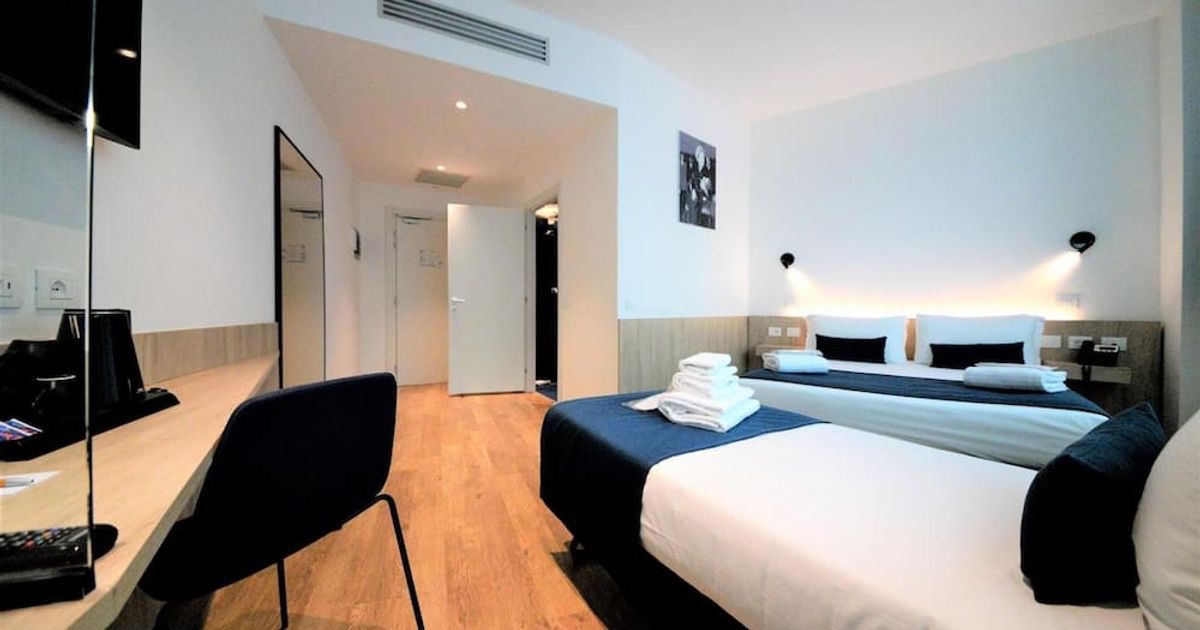
Air Rooms Rome Airport by HelloSky is the most practical option for a few hours of sleep between connections. Located inside the terminal area, connected via covered overpass. Day-use rooms from approximately EUR 65 for 3 hours. Overnight stays available. Pay-per-use showers are EUR 20 for non-overnight guests. Functional and nothing more: reviews consistently flag aging facilities. It earns its place through location and day-use flexibility, not quality.
For layovers of 10 or more hours, staying in central Rome is often comparable in price to the airport hotels and a categorically better experience. The Leonardo Express makes it easy. Factor in the 32-minute train journey each way and your airport arrival buffer when planning.
Essential Services At Rome Fiumicino Airport
![Essential Services At Rome Fiumicino Airport [FCO]](https://www.thepointsanalyst.com/wp-content/uploads/2026/03/Image-13-3.jpeg "Rome Fiumicino Airport (FCO) Guide: Terminals, Lounges, Food, Transit, and Connections 15 - Rome Fiumicino Airport")
This section covers the practical details that do not fit neatly elsewhere but are genuinely useful to know, especially if something goes wrong.
- Lost and Found. FCO splits reporting by location. For items lost in the general terminal area or before security, contact +39 06 65955253 (T3 arrivals area, Monday to Friday 07:00 to 15:00). For items lost after security or in baggage reclaim, contact +39 06 6595 3313 (Monday, Wednesday, and Friday 07:00 to 15:00). For missing or damaged checked baggage, go directly to your airline’s handling agent desk before leaving the baggage claim area.
- Luggage Storage. Terminal 3, International Arrivals, near the bus station exit. EUR 10 per item per 24-hour period, paid upon collection. Daily approximately 06:30 to 23:30.
- Medical and Pharmacy. First aid available 24 hours. Emergency: +39 06 6595 3133 or 3134. Pharmacies operate landside in both terminals during daytime hours only.
- Family Facilities. Play areas for children are available in both terminals. Family toilets and baby changing facilities are located throughout T1 and T3.
- Showers. HelloSky landside between T1 and T3: EUR 20, includes towel and toiletries, approximately 07:00 to 21:00. Also available inside the Plaza Premium (T1 and T3) and Prima Vista (T3) lounges as part of entry.
- Smoking. Designated areas in marked locations including Boarding Area E. Not permitted in general terminal areas.
- Wi-Fi. Free and unlimited. Connect to “Airport Free Wi-Fi.” No registration required.
Service hours, locations, and prices are subject to change. Confirm current details at adr.it before travel.
What Is Changing At Rome Fiumicino Airport
The Terminal 3 renovation was completed in May 2025 after a EUR 250 million investment, adding 150 new check-in counters, doubling luggage belt capacity, and expanding the terminal by 41,000 square meters. The CT scanner rollout completed in July 2025, meaning most passengers can now keep liquids over 100ml and electronics in their bags at security. The important exception is that flights to the United States and Israel still use standard X-ray screening. Europe’s largest airport solar farm also opened in January 2025, with FCO targeting net-zero carbon by 2030.
ITA Airways and Star Alliance. ITA left SkyTeam in April 2025 and is expected to join Star Alliance in the first half of 2026. Once the transition is fully complete, ITA’s lounges at FCO are expected to open to Star Alliance Gold members. Until then, check with your carrier for current lounge access rules.
![Rome Fiumicino Airport [FCO] Long-Term Expansion Plan Rendering](https://www.thepointsanalyst.com/wp-content/uploads/2026/03/Image-14-2.jpeg "Rome Fiumicino Airport (FCO) Guide: Terminals, Lounges, Food, Transit, and Connections 16 - Rome Fiumicino Airport")
The Long-Term Expansion Plan. ADR has submitted a EUR 9 billion plan targeting 100 million annual passengers by 2046, including a fourth runway, a new Terminal 4, and extensions to T1 and T3. None of it is under construction yet and regulatory approvals are expected to take another 18 to 24 months. For 2026 travelers, the practical takeaway is that FCO is operating near its comfortable peak capacity during summer. Build in more buffer time than usual in July and August.
ETIAS. The EU’s new electronic travel authorization for visa-exempt non-EU nationals including U.S., Australian, Canadian, and UK travelers is expected to launch in late 2026. Once active, travelers will need to register and pay a small fee online before entering the Schengen Area. Confirm current status before booking travel in late 2026 or beyond.
Infrastructure plans and timelines are subject to change. Confirm current status at adr.it before travel.
Final Thoughts
Rome Fiumicino Airport (FCO) is a better airport than its reputation suggests, and a more complicated one than its ranking implies. The 7th best airport in the world is also an airport where thousands of travelers miss their lounge every year because they boarded the SkyBridge before using it, where the Star Alliance lounge situation is still settling after a major alliance reshuffle, and where the E31 to E44 satellite quietly strips away most of the creature comforts that make a long-haul departure bearable.
The airport is genuinely impressive in a lot of ways. The CT scanner rollout is complete and ahead of most European peers. The Terminal 3 renovation finished in 2025 and the check-in experience is noticeably better for it. The Skytrax 5-star rating is earned. The food at Eataly in Terminal 1 is legitimately good. And the Leonardo Express putting Rome 32 minutes away changes what a layover here can be.
But the friction points are real too. The SkyBridge to the E31 to E44 satellite is a one-way commitment with no lounges and almost no food on the other side. The lounge situation for Star Alliance passengers is genuinely unclear while the ITA Airways transition finishes. And peak-season crowds are real, with the capacity ceiling approaching faster than the long-term expansion plan is moving through approvals.
Go in knowing these three things and FCO becomes straightforward.
- The boarding area is more important than the terminal. Terminal 1 has Boarding Area A. Terminal 3 has Boarding Area E, split between the main building and the E31 to E44 satellite. Your gate letter determines your lounge options, your walking time, and whether you are about to cross a passport control boundary. The terminal label on your ticket is where you check in. Everything after security is governed by the gate prefix.
- If your gate is E31 to E44, use the lounge before you board the SkyBridge. There is nothing waiting for you in the satellite except gates. The people mover runs one way for departing passengers. Once you are on the other side, coming back means re-clearing security. Use the Plaza Premium T3 or the Prima Vista, eat something, and then board the train to your gate. This one piece of information is worth more than everything else in this guide for anyone flying transatlantic from FCO.
- Rome is 32 minutes away. The Leonardo Express runs from inside the terminal complex to Roma Termini every 15 minutes and costs EUR 14. If your layover is long enough and your entry requirements are in order, go. Rome is one of the great cities in the world and most people who connect through FCO never set foot in it. That is a genuine shame, and one that is very easy to fix with a little planning.
Know those three things and Rome Fiumicino stops being the airport you are stuck in and starts being the one you are glad you passed through.