Blog >> How To Avoid Delta Air Lines Baggage Fees: Status, Credit Cards, And Common Mistakes [2026]
By Kevin Zanes / January 19, 2026
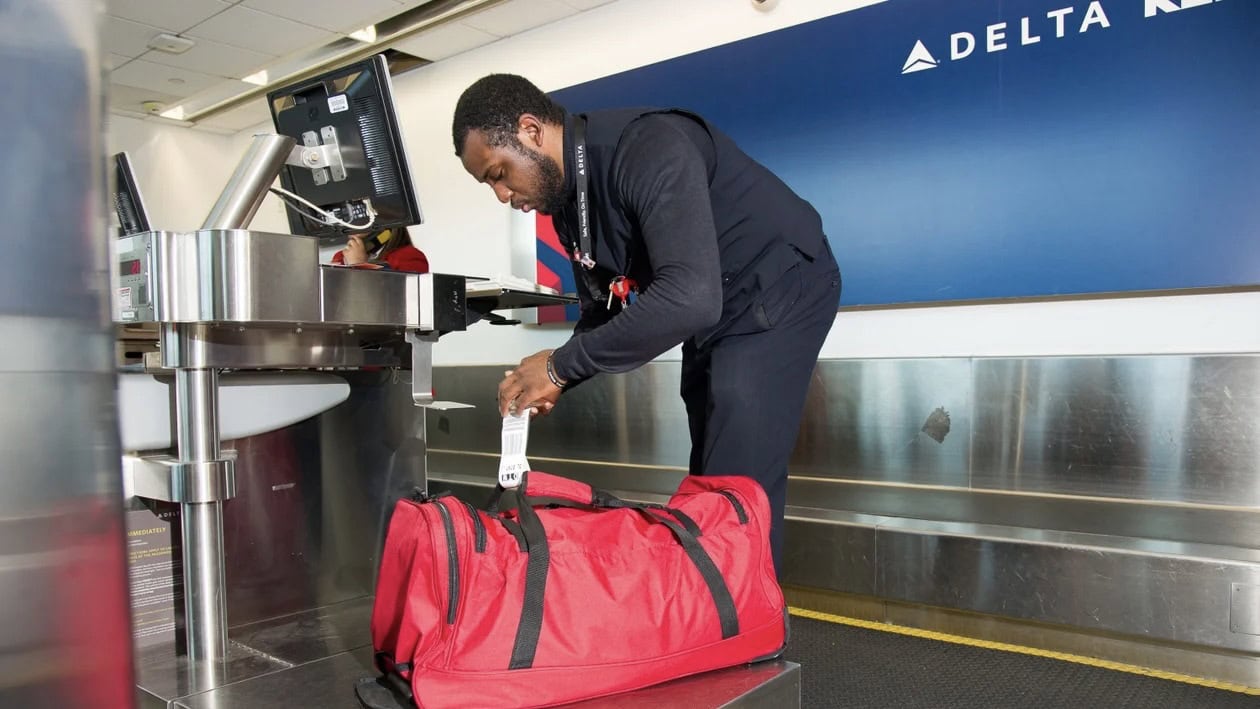
Delta Air Lines baggage fees look simple at first glance. You either pay for a checked bag or you do not. In practice, many travelers still end up paying fees they could have avoided with a little planning.
This guide exists to fix that problem.
Every year, travelers flying Delta Air Lines spend hundreds of dollars on baggage fees without realizing they already qualified for free checked bags. Others assume bags are included, only to be surprised at the airport. Families, couples, and occasional Delta flyers are especially vulnerable because the rules change based on fare type, credit cards, and elite status.
The good news is this. Avoiding Delta baggage fees does not require memorizing a long policy page or becoming a frequent flyer. For most people, it comes down to understanding a few key rules and using one simple strategy consistently.
This guide explains:
- Who actually pays Delta baggage fees
- Who qualifies for free checked bags and why
- How Delta credit cards eliminate baggage fees
- When elite status matters and when it does not
- The most common mistakes that still trigger fees
Just as important, this guide explains who this information is meant for and who can safely skip parts of it.
Who This Guide Is For
- Travelers who check bags at least once or twice per year
- Anyone flying Delta one to four times per year
- Beginners who want to avoid unnecessary airline fees
- Families and couples trying to keep travel costs predictable
Who This Guide Is Not For
- Ultra frequent flyers with top tier Medallion status
- Travelers who only fly with a carry-on bag
- People already confident navigating Delta baggage rules
This is not a legal document or a replacement for Delta official policy. Instead, it is a practical, traveler focused breakdown of how baggage fees actually work in the real world. The goal is to help you avoid paying fees you do not need to pay, without adding stress to your trip.
If you have ever wondered why someone else checked a bag for free while you paid, or why a credit card can save more money than it costs, you are in the right place.
Delta Air Lines Baggage Fees Overview
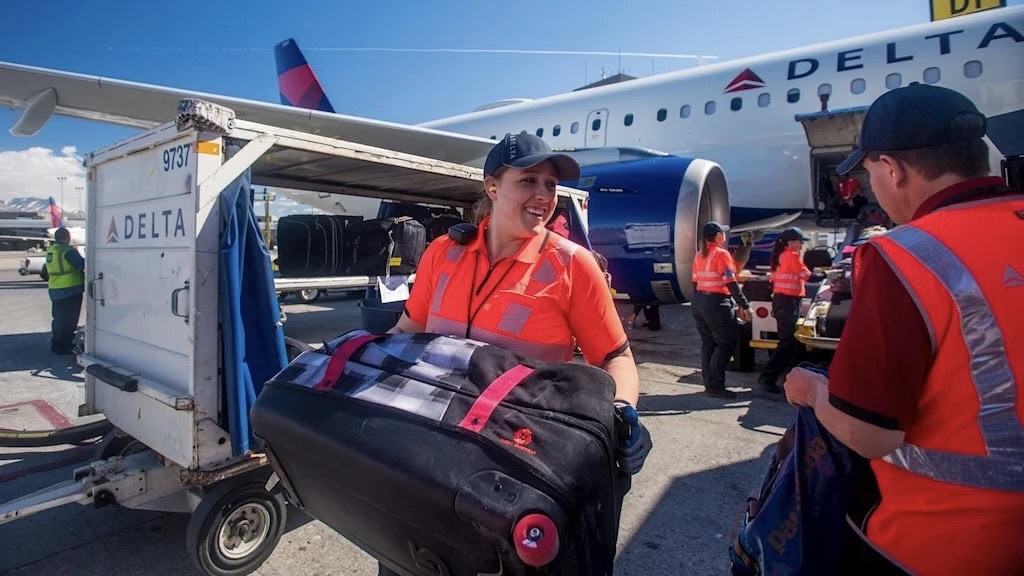
Before we dive into strategies to avoid fees, it helps to understand what Delta actually includes for free and what triggers a charge. The rules are not overly complicated, but the details matter – especially when you are trying to avoid unexpected fees at the airport.
Free Carry-On And Personal Item
Every passenger flying with Delta is allowed:
- One free carry-on bag: This goes in the overhead bin and must fit the airline’s size limits.
- One free personal item: Items like a purse, briefcase, laptop bag, small backpack, or camera bag that fit under the seat in front of you.
These allowances apply even on basic fares like Main Basic (formerly Basic Economy).
Carry-on size limits:
- Measure your bag carefully – the sum of length, width, and height must stay within the airline’s limits (typically 22″ x 14″ x 9″ including handles and wheels).
- Bag weight is usually not restricted on most domestic flights, but a few international airports have weight limits for carry-ons.
Checked Bags
Checked bags are typically not included on standard Delta tickets. Most travelers flying Main Basic or Main Cabin without status or a qualifying credit card will pay a fee for each checked bag.
Here is how it works in general:
- First checked bag: Fee applies unless waived
- Second checked bag: Fee applies unless waived
- Third checked bag and beyond: Higher fees apply (sometimes $150+ per piece).
Fees vary depending on the route, fare type, and how you paid for your ticket, but for most U.S. domestic flights, the standard fees for travelers without status or eligible cards are:
- First checked bag: around $35 one-way
- Second checked bag: around $45 one-way
These checked bag fees can add up quickly, especially for families or longer trips, which is why understanding them is so valuable.
Note: For the always-up-to-date rules, including destination exceptions and rare special cases, you can visit the official Delta baggage policy page.
Who Actually Pays Delta Air Lines Baggage Fees

One of the biggest reasons travelers feel frustrated by baggage fees is simple. Two people can be on the same flight, check the same bag, and pay very different prices. One pays nothing. The other pays $35 or more each way. With Delta Air Lines, baggage fees are not random. They are tied to a few specific factors, and once you understand them, it becomes much easier to predict when you will pay and when you will not.
You Will Usually Pay Delta Baggage Fees If You
Most travelers who pay Delta baggage fees fall into this group.
You will usually pay for checked bags if you:
- Do not hold a qualifying Delta co-branded credit card
- Do not have Medallion elite status
- Book Delta Basic Economy fares
- Fly domestic routes on standard cash tickets
This describes a large portion of casual travelers. Someone flying Delta once or twice per year, booking the cheapest fare they see, and checking one bag is the most likely to pay fees.
Delta makes this easy to miss because:
- Carry-on bags are free, which creates the impression bags are included
- Baggage benefits are not always clearly highlighted during booking
- Basic Economy looks similar to Main Cabin until after purchase
If this sounds familiar, do not worry. This guide is built for this exact situation.
You May Not Pay Delta Baggage Fees If You
On the flip side, many travelers already qualify for free checked bags and do not realize it.
You may avoid Delta baggage fees if you:
- Hold an eligible Delta SkyMiles credit card
- Have Silver Medallion status or higher
- Fly on certain international routes where bags are included
- Are traveling on eligible award tickets
This is where confusion often sets in. Two travelers may both believe they qualify for free bags, but only one actually does because the benefit applies differently depending on how the ticket was booked.
For example:
- A credit card benefit may cover the cardholder and companions, but only if they are on the same reservation
- Elite status benefits may not extend to everyone traveling together
- Award tickets can follow different baggage rules than cash tickets
Understanding these distinctions is critical. Many baggage fees happen not because benefits do not exist, but because they do not apply in the way travelers expect.
Why Delta Baggage Fees Feel Inconsistent
Delta baggage rules are logical once you see the full picture, but they can feel inconsistent at the airport.
That usually happens because:
- Fare type overrides other benefits, especially Basic Economy
- The operating airline matters on partner flights
- Benefits are tied to the reservation, not just the traveler
This is why one of the main goals of this guide is clarity. You should be able to look at your ticket, your credit cards, and your status, then know with confidence if you will pay a baggage fee before you leave home.
The Easiest Ways To Avoid Delta Air Lines Baggage Fees Without Status Or Credit Cards
Not every traveler wants to open a new credit card or chase airline status. The good news is that you can still avoid many Delta baggage fees with simple, practical choices. This section focuses on strategies that work for almost everyone, even if you only fly once or twice per year and have no elite benefits.
Pack Smarter And Lighter
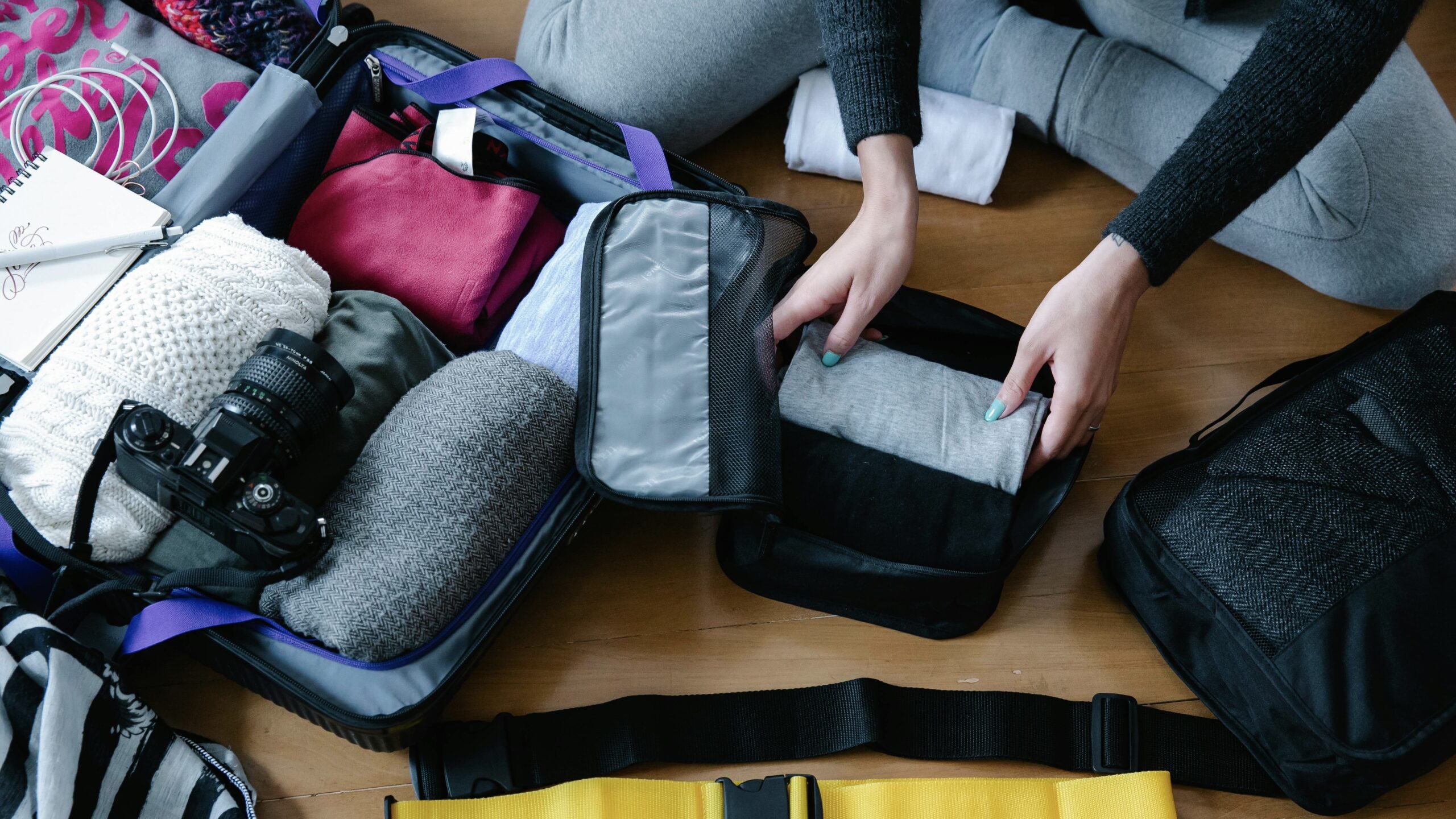
The most reliable way to avoid baggage fees is also the most obvious. Do not check a bag. That sounds simple, but most people overpack because they do not plan their luggage with airline rules in mind.
A few small changes make a big difference:
- Choose a carry-on suitcase that fits airline size limits exactly
- Use compression packing cubes to reduce bulk
- Plan outfits that can be mixed and matched
- Wear your bulkiest shoes and jacket on the plane
Many travelers discover they can pack for a four or five day trip using only a carry-on once they try it intentionally. For longer trips, packing lighter still helps. Even if you end up checking a bag, keeping weight down reduces the risk of overweight fees.
Use The Personal Item Allowance Strategically
Delta allows both a carry-on and a personal item. Most travelers underuse the personal item. A structured backpack or soft sided bag that fits under the seat can hold a surprising amount of clothing, toiletries, and tech. This often replaces what would have been a second checked bag.
Good personal item strategies include:
- Using a backpack instead of a small purse
- Packing dense items like jeans or sweaters in the personal item
- Keeping liquids and electronics split between bags
As long as the bag fits fully under the seat, Delta does not care what is inside it.
Avoid Last Minute Gate Checked Bags
One of the most frustrating baggage fees happens at the gate. When overhead bins fill up, gate agents may require larger carry-ons to be checked. If you do not qualify for a free checked bag, this can trigger a fee even though you tried to avoid checking luggage.
To reduce this risk:
- Board as early as your ticket allows
- Avoid oversized carry-on bags
- Choose bins near the back of the plane if the front is full
This is especially important on smaller aircraft and regional flights, where overhead space is limited.
Some trips make checked bags unavoidable. Family travel, longer stays, and winter trips often require more space. If you know you will need to check a bag, this is where strategy matters most. Paying baggage fees should be a conscious choice, not a surprise at the airport.
How Delta Credit Cards Eliminate Baggage Fees
For most casual Delta travelers, a Delta co-branded credit card is the simplest and most reliable way to avoid baggage fees. You do not need to fly often, and you do not need elite status. You just need the right card and to use it correctly.
Delta Credit Cards That Include Free Checked Bags
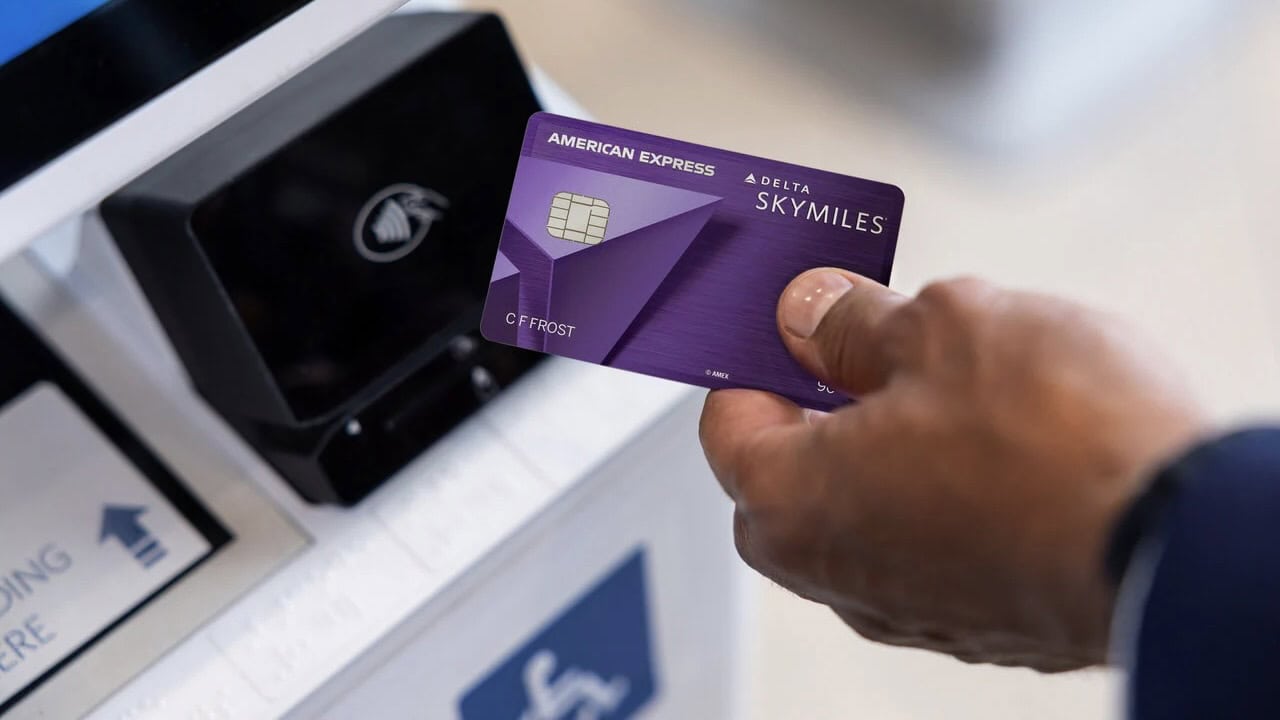
Several Delta SkyMiles credit cards issued by American Express include a free checked bag benefit when flying with Delta Air Lines.
As of now, the following Delta SkyMiles credit cards include a free first checked bag for the primary cardholder and eligible companions on the same reservation:
- Delta SkyMiles® Gold American Express Card
- Delta SkyMiles® Platinum American Express Card
- Delta SkyMiles® Reserve American Express Card
- Delta SkyMiles® Gold Business American Express Card
- Delta SkyMiles® Platinum Business American Express Card
- Delta SkyMiles® Reserve Business American Express Card
Each of these cards offers:
- One free checked bag per passenger
- Coverage for the cardholder plus companions on the same reservation
- Savings of up to the standard first checked bag fee per person, per flight
Importantly, the Delta SkyMiles® Blue American Express Card does not include a free checked bag, even though it earns Delta SkyMiles. This is a common point of confusion.
How The Free Checked Bag Benefit Actually Works
While the cards differ in annual fees and extra perks, the baggage benefit works similarly across most eligible cards.
In general:
- The primary cardholder must be flying
- The flight must be Delta operated, not just Delta marketed
- All travelers must be booked on the same reservation
- Each eligible passenger receives one free checked bag
This makes these cards especially valuable for couples and families. For example, a family of four checking one bag each on a round trip flight can save hundreds of dollars in baggage fees in a single year.
If you check a bag more than once per year, a Delta credit card is almost always cheaper than paying fees or chasing status.
Why The Delta SkyMiles Gold Card Is Often Enough
Many travelers assume they need a high end card to avoid baggage fees. In reality, the Delta SkyMiles® Gold American Express Card often delivers the best value for casual flyers.
Reasons it works well:
- Lower annual fee than premium Delta cards
- Same free checked bag benefit as higher tier cards
- No need to chase Medallion status
If your primary goal is avoiding baggage fees, the entry level Delta cards usually accomplish that on their own.
Common Credit Card Limitations People Miss
Even with the right card, baggage fees can still appear if certain conditions are not met.
The most common issues include:
- Basic Economy fares, which can restrict benefits in some scenarios
- Partner airline flights, where Delta is not the operating carrier
- Separate reservations, even if passengers are traveling together
- The cardholder not being listed as a passenger
For example, simply paying for someone else’s ticket with your Delta card does not guarantee they get a free bag. The cardholder must be flying on the reservation.
For travelers flying Delta one to four times per year, Delta credit cards offer predictable, repeatable savings. They remove guesswork, reduce airport stress, and often pay for themselves after one or two trips. Instead of asking if a checked bag is worth the fee each time, the decision is already made.
Delta Medallion Status And Free Checked Bags
Delta Medallion status is the other major way travelers avoid baggage fees. Unlike credit cards, status is earned through flying and spending. For some travelers, this happens naturally. For others, it requires intentional planning.

Delta SkyMiles Medallion Status Overview
Delta elite status lives inside the SkyMiles program and is known as Medallion status. There are four published tiers:
- Silver Medallion
- Gold Medallion
- Platinum Medallion
- Diamond Medallion
As you move up the tiers, benefits increase. These include upgrades, priority services, and fee waivers. Baggage benefits start at the lowest elite level, which surprises many travelers. Medallion status is earned through a combination of flying, spending, and qualifying activity during the calendar year. This makes it more practical for frequent Delta flyers than for occasional travelers.
Delta Silver Medallion Baggage Benefits
Silver Medallion is the entry point to Delta elite status, and it already includes meaningful baggage savings.
With Silver Medallion status:
- The member receives one free checked bag
- Standard weight limits apply
- The benefit applies on Delta operated flights
This alone can save hundreds of dollars per year for travelers who check bags regularly.
However, there is an important limitation. Silver Medallion baggage benefits primarily apply to the member. Companions may not always receive the same free bag allowance unless other conditions are met. This makes Silver status less powerful for families compared to a Delta credit card.
Delta Gold, Platinum, And Diamond Medallion Benefits
Higher Medallion tiers expand baggage benefits and improve the overall airport experience.
With Gold Medallion and above:
- More free checked bags are allowed
- Higher weight limits may apply
- Bags often receive priority handling
For travelers checking multiple bags or flying with heavier luggage, these higher tiers add real value. Diamond Medallion members, in particular, rarely think about baggage fees at all. That said, reaching these levels usually requires significant flying or spending. The baggage benefits are valuable, but they are rarely the sole reason to pursue higher status.
The Real Cost Of Earning Status for Bags
This is the question many travelers skip. If your only goal is avoiding baggage fees, chasing Medallion status is usually inefficient. The flights and spending required to earn status often cost far more than the baggage fees you are trying to avoid.
Status makes sense when:
- You already fly Delta frequently
- You value upgrades and priority services
- Baggage savings are a secondary benefit
If you only fly a few times per year, a credit card almost always delivers the same baggage benefit at a much lower cost. Medallion status is powerful, but it is not designed for occasional flyers. Delta credit cards exist precisely because most travelers do not fly enough to earn elite status organically.
Elite Status vs Credit Cards For Delta Baggage Fees
Once you understand how both options work, the comparison becomes much clearer. Delta Medallion status and Delta credit cards can both eliminate baggage fees, but they are built for very different types of travelers.
When Delta Medallion Status Makes Sense
Delta Medallion status works best for travelers who already fly Delta often. The baggage benefits are valuable, but they are usually a side effect of frequent travel, not the primary goal.
Elite status makes sense if:
- You fly Delta regularly throughout the year
- You already earn Medallion status without changing your travel habits
- You check multiple bags or heavier bags
- You value upgrades, priority boarding, and fee waivers beyond baggage
In these cases, free checked bags are just one of many perks. You are not earning status to save on baggage fees. You are earning status because you are already loyal to Delta.
When Delta Credit Cards Make More Sense
For most casual and moderate travelers, Delta credit cards are the more practical solution.
Credit cards make sense if:
- You fly Delta one to four times per year
- You want predictable baggage benefits without tracking qualification metrics
- You often travel with companions or family
- You want to avoid surprises at the airport
With a credit card, you do not need to think about how many flights you have taken or how much you have spent. The benefit is there every time you fly, as long as the cardholder is on the reservation.
This simplicity is why credit cards are often the better option for baggage fees alone.
Cost Comparison: Status vs Cards
Here is the part many travelers overlook. Earning Medallion status typically requires significant spending on flights or credit card activity. That cost can easily exceed the value of waived baggage fees, especially if you only check one bag a few times per year.
A Delta credit card, by contrast, has a fixed annual fee. For many travelers, the savings from one or two round trips with checked bags already justify the cost. For families, credit cards are more reliable than status.
If you fly Delta more than once per year and ever check a bag, a Delta credit card is usually the cheapest, least stressful solution.
Everything else is situational optimization.
Special Scenarios That Change Delta Air Lines Baggage Fees
Even travelers who understand Delta baggage rules can still run into fees because certain situations follow different logic. Award tickets, international routes, partner airlines, and group travel can all change how baggage benefits apply.

Award Tickets On Delta Air Lines
A common assumption is that award tickets automatically include free checked bags. With Delta Air Lines, that is not always true.
In most cases:
- Delta award tickets follow the same baggage rules as cash tickets
- If you qualify for free bags through a credit card or Medallion status, those benefits usually apply
- If you do not qualify through another method, standard checked bag fees may still apply
Where travelers get tripped up is partner flights. If you book an award ticket that includes a non Delta operating carrier, the baggage rules may follow the partner airline instead of Delta. This can change both the number of free bags and weight limits.
The key rule is simple. Always check which airline is operating each segment of your award ticket.
International Flights On Delta
International baggage rules are often more generous, but they are not universal.
On many long haul international routes:
- One or more checked bags may be included automatically
- Weight limits are often higher than domestic flights
However, some international routes follow domestic style baggage rules, especially on short haul international flights. This means you could still face checked bag fees unless you qualify for an exemption. Do not assume international equals free bags. Always review the fare details before booking.
Delta Partner Airlines And Codeshare Flights
Delta is part of the SkyTeam alliance, which means many flights are operated by partner airlines.
This matters because:
- Baggage rules are usually set by the operating carrier
- Delta credit card benefits may not apply
- Medallion benefits can vary by partner
For example, a flight booked through Delta but operated by a partner airline may follow that airline’s baggage policy, not Delta’s. This is one of the most common causes of surprise fees. Always confirm the operating carrier when booking, especially for international itineraries.
Families, Group Travel, And Separate Reservations
Baggage benefits are tied to the reservation, not just the traveler.
This creates issues when:
- Families book separate tickets
- One traveler has a credit card or status and others do not
- Tickets are reissued or changed
For Delta credit card benefits, companions usually need to be on the same reservation as the cardholder. Separate bookings can break the free bag benefit, even if everyone is flying together. When traveling as a group, it is often worth consolidating reservations to protect baggage benefits.
Military, Sports Equipment, And Special Items
Delta offers generous baggage allowances for active duty military members traveling on orders. These benefits can include multiple free checked bags and higher weight limits. Special items like sports equipment often count as standard checked bags, but only if they meet size and weight requirements. Oversized items can still trigger fees.
The takeaway is to review special item rules before travel. These fees are avoidable, but only if you plan ahead.
Most unexpected Delta baggage fees happen in edge cases, not routine travel. Award tickets, partner flights, and group bookings introduce variables that are easy to overlook.
Understanding Delta Air Lines Baggage Fees
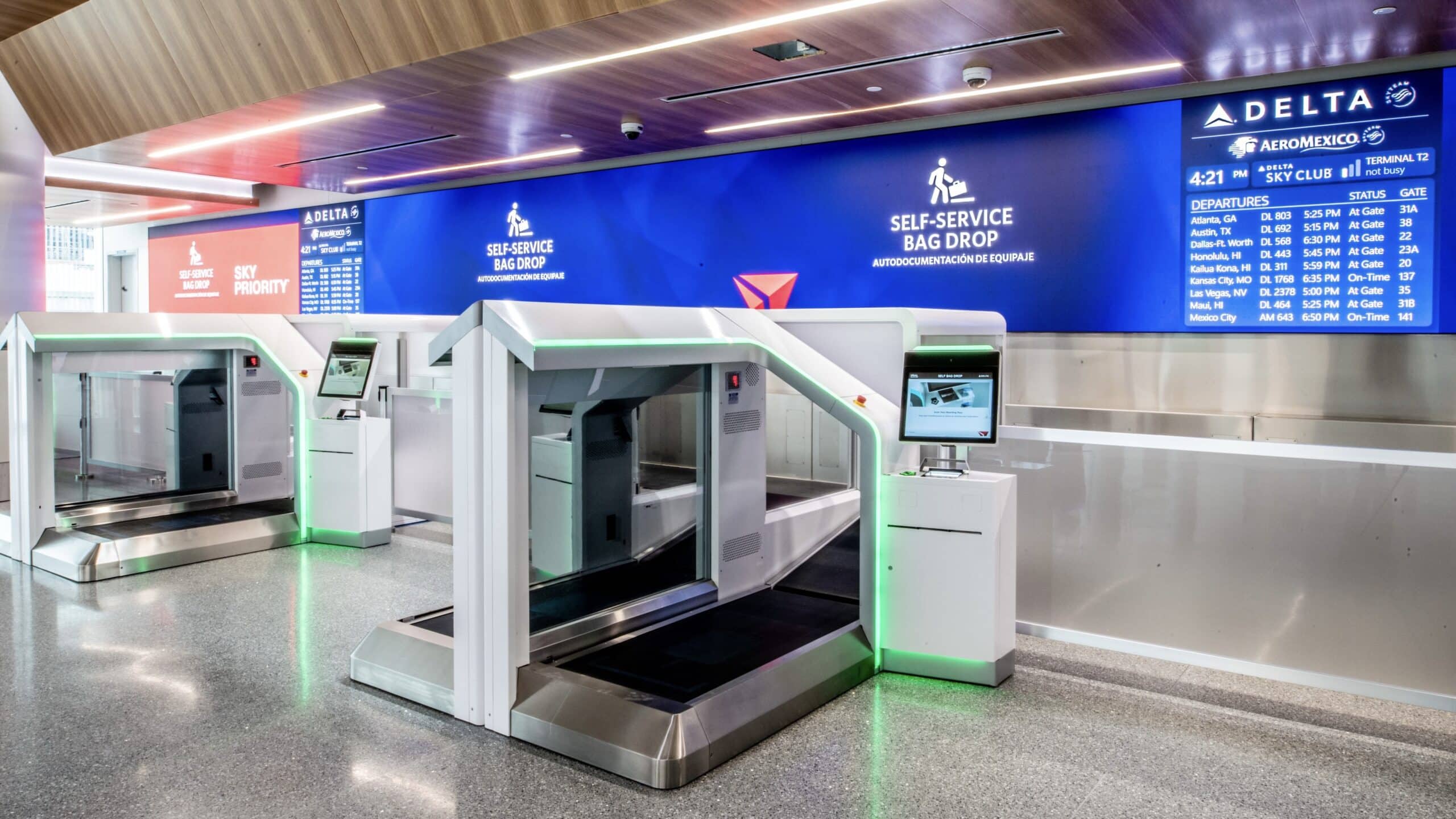
Before you can consistently avoid baggage fees, you need to understand how Delta structures them. The rules are not complicated, but they are layered. Carry-on bags follow one set of rules. Checked bags follow another. Basic Economy adds a few extra restrictions that often catch travelers off guard.
Note: For complete policy details and current fees, refer to the Delta Air Lines official baggage page.
Delta Carry-On And Personal Item Rules Explained
Delta is still one of the more generous major US airlines when it comes to carry-on bags and persona items.
Every passenger flying with Delta Air Lines is allowed:
- One carry-on bag that fits in the overhead bin
- One personal item that fits under the seat in front of you
This applies to all fare types, including Basic Economy.
The carry-on bag must fit within Delta size limits, which are designed to work with the overhead bins on most aircraft. The personal item must be small enough to fit fully under the seat, not sticking out into the aisle.
Common personal items include:
- A purse or handbag
- A laptop bag
- A small backpack
- A camera bag
Where people run into trouble is not the rule itself, but enforcement. Gate agents may check bag size if overhead space is limited. If your carry-on is too large and must be checked at the gate, you could still be charged a checked bag fee depending on your ticket and benefits.
The key takeaway is simple. Delta carry-on bags are free, but they must actually meet size expectations.
Delta Checked Bag Fees Breakdown
Checked bags are where most fees appear.
For travelers without elite status or a qualifying credit card, Delta typically charges:
- A fee for the first checked bag
- A higher fee for the second checked bag
- Significantly higher fees for additional bags
These fees are charged per person, per direction. That means a round trip flight with one checked bag can easily cost $70 or more. Delta also enforces weight and size limits on checked bags. Standard checked bags must stay under the weight limit. Oversized or overweight bags trigger additional fees that can quickly exceed the cost of the ticket itself.
This matters because many travelers assume baggage fees are flat and predictable. In reality, one heavy suitcase can undo all your savings from booking a cheap fare.
Why Delta Basic Economy Changes Everything
Delta Basic Economy is one of the biggest sources of baggage fee confusion. At first glance, Basic Economy looks like a cheaper version of Main Cabin. In reality, it removes several benefits that travelers expect, including flexibility and some baggage related perks.
With Basic Economy:
- Carry-on and personal items are still allowed
- Checked bags are not included unless you qualify through status or a credit card
- Some benefits tied to credit cards or elite status may not apply
This is where many people get caught. They assume a free checked bag benefit applies automatically, only to learn at the airport that their fare type overrides it.
Basic Economy can still make sense in certain situations, but it requires more attention. If you plan to check a bag and do not have a clear exemption, Basic Economy often ends up costing more than Main Cabin once fees are added.
Delta baggage fees are not designed to trick travelers, but they do reward preparation. Knowing the difference between carry-on rules, checked bag pricing, and fare type restrictions gives you control over your costs.
Once you understand where fees come from, avoiding them becomes much easier.
Common Delta Air Lines Baggage Fee Mistakes To Avoid

Most Delta baggage fees are not caused by ignoring the rules. They happen because travelers misunderstand how those rules apply to their specific ticket, fare type, or reservation.
- Booking Basic Economy And Expecting Free Checked Bags. Basic Economy removes several benefits that travelers assume are included. Credit card and elite benefits do not always override this fare, which often makes the cheapest ticket the most expensive once bags are added.
- Assuming Elite Status Benefits Apply To Everyone On The Reservation. Medallion baggage benefits usually apply to the elite member only. Companions may not receive the same free bag allowance, especially on larger group bookings.
- Flying A Partner Airline On A Delta Ticket. If a flight is operated by a partner airline, that airline’s baggage policy often applies. Delta credit card and status benefits may not carry over, leading to unexpected fees.
- Confusing Award Ticket Rules With Cash Ticket Rules. Award tickets do not automatically include free checked bags. In most cases, baggage rules mirror cash tickets unless another benefit applies.
- Checking Bags On Mixed Cabin Itineraries. On itineraries with multiple cabin classes, baggage rules may default to the most restrictive segment. One premium leg does not always guarantee premium baggage allowances for the full trip.
- Booking Separate Reservations For Group Travel. Free bag benefits from credit cards usually require everyone to be on the same reservation. Separate bookings can break companion benefits even if travelers are flying together.
- Waiting Until The Airport To Think About Bags. Once you arrive at the airport, your options are limited. Reviewing baggage rules and benefits before travel is the easiest way to avoid last minute fees.
Delta baggage fees are rarely unavoidable. They usually appear when travelers assume benefits apply automatically. A quick review of fare type, operating carrier, and reservation structure can prevent most surprises.
Delta vs Other Major US Airlines Baggage Fees
Delta baggage fees often feel frustrating, but they are not happening in a vacuum. Comparing Delta to other major US airlines helps put the costs and rules into context and shows where Delta is competitive and where it falls short.
Baggage Fee Comparison Table
This table is not about finding the lowest price. It is about understanding how baggage fees usually work and how they compare across airlines.
| Airline | Carry-On Included? | Personal Item Included? | Checked Bags Included? | First Checked Bag Fee | How to Avoid Fees |
| Alaska Airlines | Yes | Yes | No standard included | Applies on most fares | Elite status, co-branded cards |
| American Airlines | Yes | Yes | No standard included | Applies on most fares | Elite status, co-branded cards |
| Delta Air Lines | Yes | Yes | No standard included | Applies on most fares | Elite status, co-branded cards |
| JetBlue Airways | Yes | Yes | Varies by fare | Applies on some fares | Fare bundles, co-branded cards |
| Southwest Airlines | Yes | Yes | Not included for most | ~$35 first / ~$45 second† | A-List status, Credit card, Premium fares |
| United Airlines | Carry-on can be restricted on some fares | Yes | No standard included | Applies on most fares | Elite status, co-branded cards |
Key Takeaways From The Table
- Southwest is no longer the default free-baggage airline. Checked bag fees now apply to most passengers, though they still offer structured ways to avoid fees through loyalty tiers, premium fares, or credit cards.
- Carry-on and personal item rules are still consistent across most major U.S. airlines, including Southwest.
- Alaska, American, Delta, JetBlue, and United generally follow the industry standard of charging for checked bags on basic and standard economy fares, with exemptions through elite status or airline credit cards.
- If free bags matter to you, airline choice, fare class, and loyalty status or credit cards now play an even more important role than they did when Southwest alone offered universal free checked bags.
Where Delta Fits In The Middle
Delta is not the cheapest airline for baggage by default, but it is one of the most predictable once you know the system.
Delta stands out because:
- Carry-on bags are always included
- Credit card free bag benefits are easy to use
- Companion coverage is stronger than most competitors
At the same time:
- Basic Economy can override expected benefits
- Checked bag fees add up quickly without a card or status
For travelers willing to plan even a little, Delta is one of the easier airlines to avoid baggage fees consistently.
Is It Worth Optimizing Delta Air Lines Baggage Fees
By this point, the mechanics of Delta baggage fees should feel clearer. The more important question now is practical. Is it actually worth spending time and effort optimizing baggage fees when flying Delta Air Lines?

It Is Worth Optimizing Delta Baggage Fees If You
Optimizing baggage fees makes sense for a large group of travelers, even those who do not fly frequently.
It is usually worth it if:
- You check bags once or twice per year
- You travel with a partner, family, or group
- You fly Delta one to four times per year
- Baggage fees would exceed the annual fee of a credit card
- You prefer predictable costs over last minute decisions
For example, a single round trip with one checked bag can easily cost $70 or more. Two trips per year can push that number well past the annual fee of many Delta credit cards. At that point, optimizing is not about squeezing value. It is about avoiding unnecessary spending.
It Is Less Worth It If You
Not every traveler needs to care deeply about baggage fees.
Optimizing may not be worth it if:
- You only ever travel with a carry-on
- You rarely fly Delta
- You already hold Medallion status organically
- You are comfortable paying for bags occasionally
If you consistently pack light and avoid checking bags, Delta baggage fees may never impact your travel budget in a meaningful way.
The Practical Middle Ground
You do not need to become an expert in Delta baggage policies to benefit.
For most people, the optimal approach is simple:
- Decide if you will check bags more than once per year
- If yes, choose one clear strategy, usually a credit card
- Stop thinking about baggage fees after that
This middle ground avoids both extremes. You are not paying fees blindly, and you are not micromanaging rules for every trip.
Instead of asking how to avoid every possible baggage fee, ask this: Do I want to think about baggage fees every time I book a flight, or do I want the decision handled for me?
A Quick Checklist Before Booking
Before you book a Delta flight, run through this short checklist:
- Am I booking Basic Economy or Main Cabin
- Do I plan to check a bag
- Do I hold a Delta credit card or Medallion status
- Is my flight operated by Delta or a partner airline
Answering these questions upfront prevents almost every baggage fee surprise.
Delta baggage fees are predictable once you understand how the system works. The airline rewards travelers who plan ahead and use the tools available to them. You do not need to optimize every detail. You just need one clear strategy that fits how you travel.
Final Thoughts
Avoiding baggage fees on Delta Air Lines is not about gaming the system or chasing every possible perk. It is about understanding how Delta actually prices baggage and choosing one simple strategy that matches how you travel.
For most people, baggage fees feel frustrating because they appear unexpectedly. The moment you remove that uncertainty, the problem largely disappears. You either pack to avoid checking a bag, or you make sure you qualify for a free one before you book.
The biggest takeaway from this guide is clarity. Delta baggage rules are consistent once you know what matters. Fare type, operating airline, and how benefits are applied determine almost every outcome. When those factors are clear, there are very few surprises left.
If you fly Delta a few times per year and check bags even occasionally, a Delta credit card is often the easiest long term solution. It requires no tracking, no planning, and no guesswork. If you fly Delta frequently and earn Medallion status naturally, baggage fees become a non issue on their own.
Either way, the goal is the same. Travel should feel predictable, calm, and enjoyable. Baggage fees should not be the thing that adds stress to the start of your trip. With the right approach, Delta baggage fees stop being a problem you react to and become something you never think about again.